

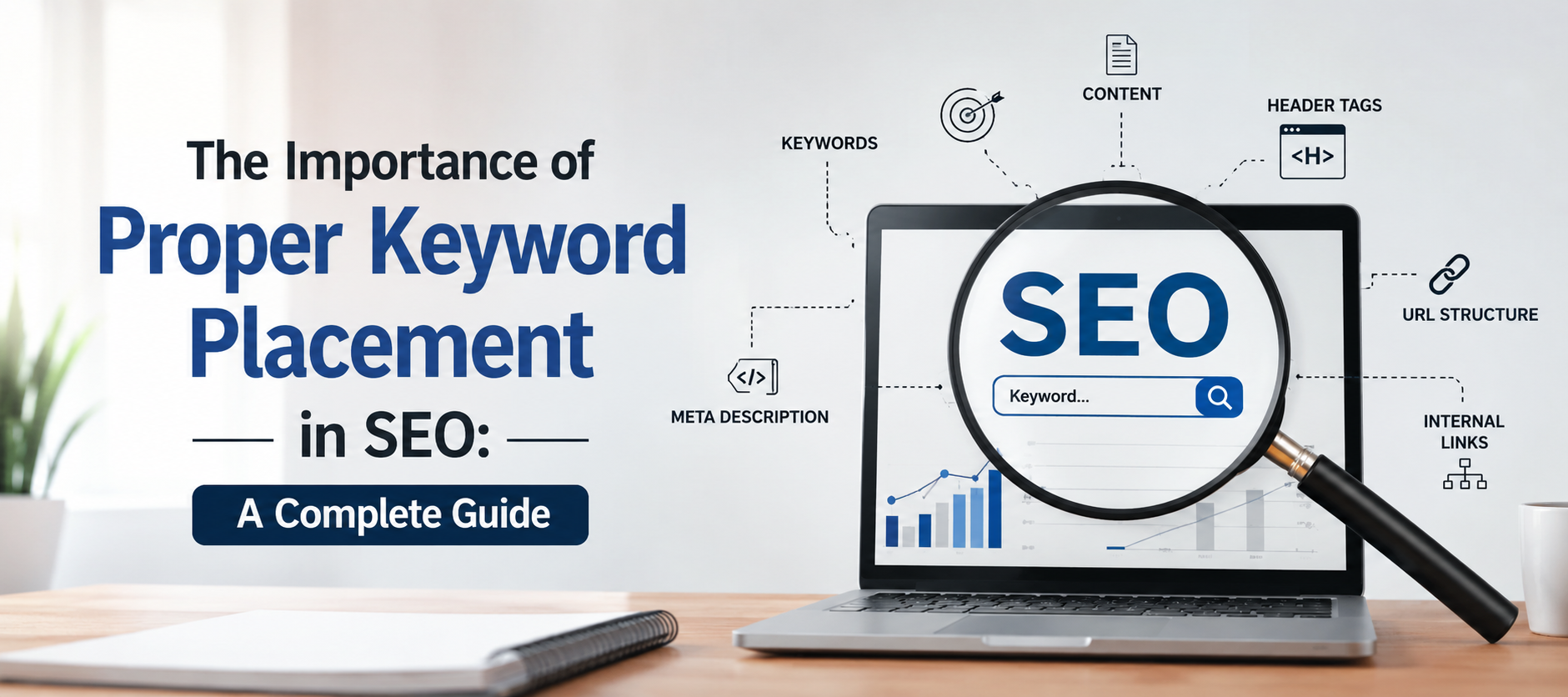
In the world of digital marketing, creating quality content is only half the battle. If your content is not optimized for search engines, it may never reach your target audience. One of the most important aspects of Search Engine Optimization (SEO) is the proper placement of keywords. While many website owners understand the importance of keywords, few know how to place them strategically to maximize rankings and traffic.
In this guide, we will explore why keyword placement matters, where to place keywords for the best results, and how to avoid common SEO mistakes.
What Are SEO Keywords?
SEO keywords are the words and phrases users type into search engines like Google when looking for information, products, or services. For example, if someone wants to improve their website rankings, they may search for terms such as "SEO keyword optimization," "keyword placement for SEO," or "on-page SEO techniques."
Search engines use these keywords to understand the relevance of your content and determine whether it should appear in search results.
Why Keyword Placement Matters
Keyword placement is just as important as keyword selection. Simply stuffing keywords throughout a page can harm your rankings rather than improve them. Google's algorithms have become highly sophisticated and now prioritize content that provides value while using keywords naturally.
Proper keyword placement helps:
• Improve search engine rankings
• Increase organic website traffic
• Enhance content relevance
• Improve user experience
• Boost click-through rates (CTR)
• Help search engines understand page topics
When keywords are strategically placed, search engines can easily identify the purpose of your content and rank it accordingly.
Best Places to Put Keywords for SEO
1. Title Tag
The title tag is one of the strongest ranking signals in SEO. Your primary keyword should appear near the beginning of the title whenever possible.
Example:
Keyword Placement for SEO: How to Optimize Content for Better Rankings
A well-optimized title can improve both rankings and click-through rates.
2. Meta Description
Although meta descriptions are not a direct ranking factor, they influence user clicks. Including your target keyword makes the description more relevant to searchers.
Example:
"Learn the best keyword placement techniques for SEO to improve search rankings, increase traffic, and optimize your website content."
3. URL Structure
Keep URLs short, clean, and keyword-rich.
Example: www.trueadvertisings.com/best-seo-agency-in-delhi.html
4. Headings (H1, H2, H3)
Search engines use headings to understand content structure. Include your primary keyword in the H1 tag and related keywords in H2 and H3 subheadings.
Examples:
• H1: Keyword Placement for SEO
• H2: Why Keywords Matter
• H2: Best SEO Keyword Strategy
This improves readability and SEO performance.
5. First 100 Words of Content
Including your target keyword naturally within the introduction helps search engines quickly understand the page topic.
For example:
"Proper keyword placement is a critical aspect of SEO content writing because it helps search engines identify the relevance of your content."
6. Throughout the Content
Keywords should appear naturally throughout your content. Focus on readability rather than density.
Modern SEO prioritizes semantic relevance, meaning related terms and variations are just as important as exact-match keywords.
Examples:
• SEO keyword optimization
• On-page SEO
• Keyword strategy
• Search engine rankings
• Content optimization
7. Image Alt Text
Search engines cannot fully understand images without descriptive text. Adding keywords to image alt tags can improve image search visibility.
Example:
alt="SEO keyword placement strategy"
8. Conclusion Section
Including your target keyword in the conclusion reinforces the topic and improves content relevance.
Avoid Keyword Stuffing
One of the biggest SEO mistakes is keyword stuffing. This occurs when a keyword is repeated excessively in an attempt to manipulate rankings.
Bad Example:
"Keyword placement for SEO is important because keyword placement for SEO improves keyword placement for SEO rankings."
Good Example:
"Strategic keyword placement helps search engines understand your content while maintaining a positive user experience."
Google may penalize websites that overuse keywords unnaturally. Focus on creating valuable content first and optimizing it second.
The Role of Keyword Intent
Successful SEO is not just about keywords; it's about understanding search intent.
There are four main types of search intent:
Informational Intent
Users seek information.
Example: "How does keyword placement affect SEO?"
Navigational Intent
Users want a specific website.
Example: "Google Search Console"
Commercial Intent
Users are researching products or services.
Example: "Best SEO tools for keyword research"
Transactional Intent
Users are ready to take action.
Example: "Hire SEO expert"
Matching content with search intent significantly improves rankings and conversions.
Benefits of Proper Keyword Optimization
When keywords are placed strategically, businesses can experience several benefits:
• Higher Google rankings
• Increased organic traffic
• Better user engagement
• Improved website authority
• More qualified leads
• Higher conversion rates
Effective keyword optimization creates a strong foundation for long-term SEO success.
Final Thoughts
Keyword placement remains one of the most important elements of successful SEO. However, modern SEO requires a balanced approach that combines strategic keyword usage with high-quality content and excellent user experience.
Focus on placing keywords naturally in titles, headings, URLs, meta descriptions, images, and throughout your content. Avoid keyword stuffing and prioritize relevance, readability, and user intent.
By implementing a smart keyword strategy, businesses can improve their search engine rankings, attract more organic traffic, and achieve sustainable growth online.
Tags
Best SEO Agency in Delhi SEO Company Delhi SEO Services Delhi Digital Marketing Delhi Local SEO Technical SEO On Page SEO Off Page SEO Organic Traffic Google Ranking SEO Expert Delhi Website Optimization Search Engine Optimization True AdvertisingsFrequently Asked Questions
What is the biggest digital marketing trend in 2026?
AI-powered marketing and personalized customer experiences are among the biggest trends.
Why is Local SEO important?
Local SEO helps businesses attract customers in nearby areas through Google Search and Maps.
How important is video marketing?
Video marketing generates higher engagement, trust and conversion rates than most content formats.

