Digital marketing continues to evolve at an incredible pace. As technology advances and consumer behavior changes, businesses must adapt their strategies to stay competitive. In 2026, brands that embrace innovation, personalization, and data-driven marketing will have a significant advantage over their competitors.
Whether you are a startup, local business, or established enterprise, understanding the latest digital marketing trends can help you generate more leads, increase brand visibility, and improve your return on investment (ROI).
1. AI-Powered Marketing is Becoming the New Standard
Artificial Intelligence (AI) is transforming how businesses approach digital marketing. From content creation and customer support to predictive analytics and campaign optimization, AI tools are helping marketers achieve better results in less time.
AI-powered chatbots can provide instant customer support, while machine learning algorithms analyze customer behavior to deliver personalized experiences. Businesses that integrate AI into their marketing strategies can improve efficiency and customer satisfaction.
2. Voice Search Optimization is Growing Rapidly
With the increasing popularity of smart speakers and voice assistants, voice search is becoming a major factor in SEO. Consumers are now searching using natural language phrases instead of short keywords.
For example, instead of searching for "digital marketing agency Delhi," users may ask, "Which is the best digital marketing agency in Delhi?"
Businesses should focus on conversational keywords, FAQs, and local SEO optimization to improve visibility in voice search results.
3. Video Marketing Continues to Dominate
Video content remains one of the most effective ways to engage audiences. Platforms like YouTube, Instagram Reels, Facebook Videos, and LinkedIn Video are driving massive engagement.
Short-form videos are particularly effective because they capture attention quickly and communicate messages efficiently. Brands are using videos for product demonstrations, customer testimonials, educational content, and behind-the-scenes stories.
Videos not only increase engagement but also improve website dwell time, which can positively impact search engine rankings.
4. Hyper-Personalization Improves Customer Experience
Modern consumers expect personalized experiences. Generic marketing messages are becoming less effective as users prefer content tailored to their interests and needs.
Brands are leveraging customer data to create personalized email campaigns, targeted advertisements, and customized website experiences. Personalized recommendations and dynamic content help businesses improve conversions and customer retention.
Companies that invest in personalization often see higher engagement rates and stronger customer relationships.
5. Local SEO Remains Essential for Business Growth
Local SEO continues to be one of the most valuable digital marketing strategies, especially for businesses serving specific geographic areas.
Optimizing your Google Business Profile, collecting customer reviews, maintaining accurate business information, and creating location-based content can significantly improve local search visibility.
For example, businesses targeting customers in Delhi should optimize for keywords such as "digital marketing company in Delhi," "SEO services in Delhi," and "best digital marketing agency near me."
6. Social Commerce is Revolutionizing Online Shopping
Social media platforms are no longer just marketing channels; they have become powerful sales platforms. Consumers can now discover, evaluate, and purchase products directly through social media applications.
Instagram Shops, Facebook Marketplace, and other social commerce features allow businesses to reduce friction in the buying journey. This trend is particularly beneficial for eCommerce brands looking to increase conversions.
Businesses should focus on creating engaging content that encourages direct purchases through social platforms.
7. First-Party Data is More Important Than Ever
As privacy regulations become stricter and third-party cookies continue to decline, businesses must prioritize collecting first-party data.
First-party data includes information gathered directly from customers through website interactions, email subscriptions, surveys, and purchase histories.
This data helps marketers create more accurate audience segments and personalized campaigns while maintaining compliance with privacy regulations.
Building trust and transparency with customers will be crucial for long-term marketing success.
8. Content Marketing Focuses on Expertise and Trust
Search engines are prioritizing high-quality content that demonstrates expertise, experience, authority, and trustworthiness. Businesses that consistently publish valuable content are more likely to rank higher in search results.
Blog posts, case studies, industry reports, guides, and educational resources can help establish credibility while attracting organic traffic.
Content should answer real customer questions and provide actionable insights rather than simply targeting keywords.
Conclusion
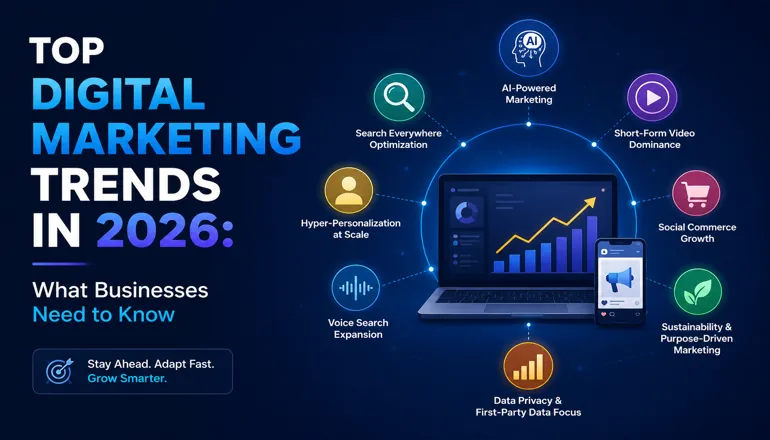
The digital marketing landscape in 2026 is being shaped by AI, personalization, video content, voice search, local SEO, social commerce, and data privacy. Businesses that embrace these trends will be better positioned to attract customers, improve engagement, and achieve sustainable growth.
Success in digital marketing is no longer about following traditional strategies alone. It requires a combination of technology, creativity, and customer-centric thinking. By staying ahead of emerging trends and continuously optimizing your marketing efforts, your business can build a strong online presence and outperform competitors.
If you want to grow your brand online, now is the perfect time to invest in modern digital marketing strategies that align with the future of consumer behavior.